Context and role
Cargo Nexus is the capstone for my TechCrush AI Automation course. A team of 11 built it. It is a course project, not a commissioned client job.
I led the backend and the n8n integration with a small core team, designed the brand and the pitch deck, and presented to the panel with two teammates.
What was at risk
Import shipments depend on paperwork that has to agree with itself. A missing or mismatched document can hold a shipment up. The project set out to catch those problems early, before customs does.
The approach
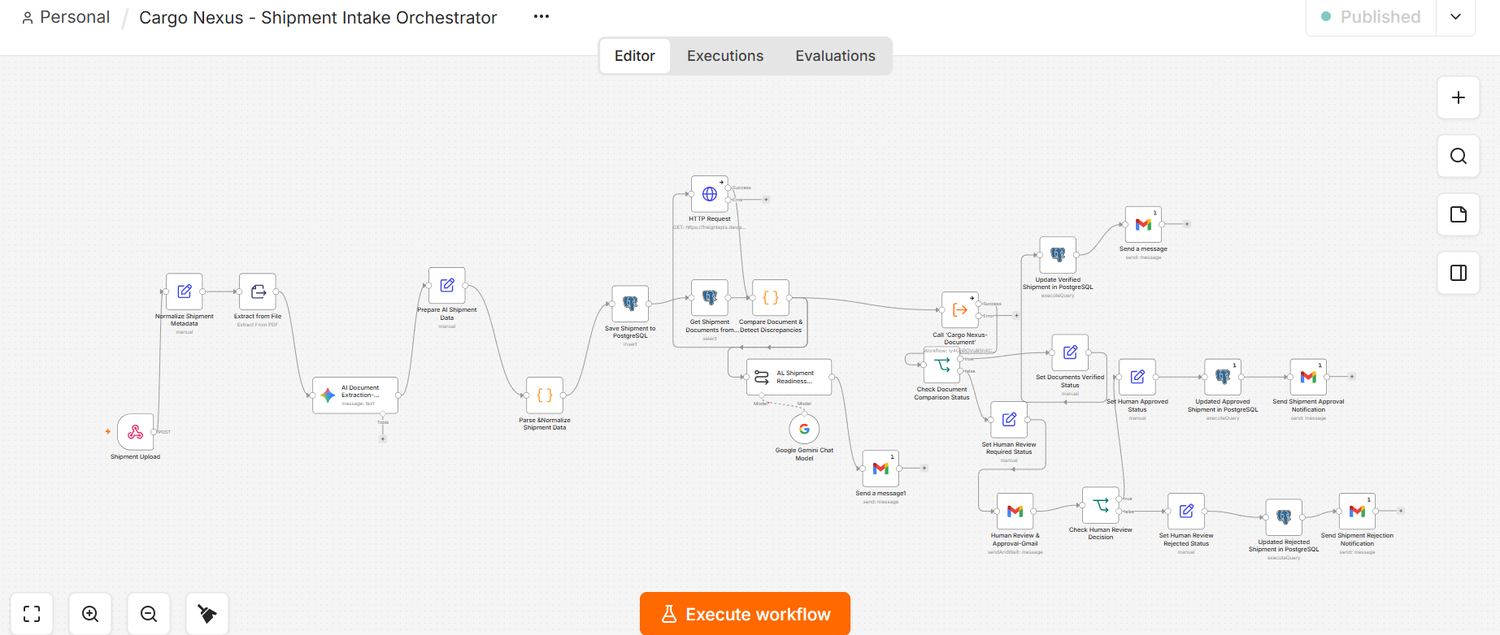
- Shipment documents arrive through a webhook.
- The PDFs are read and Gemini pulls out and tidies the key fields.
- The records are compared with each other. Missing or mismatched documents are flagged.
- The document checks run in a separate sub-workflow, and an external freight API is called by HTTP request.
- Cases that need a decision go to a human reviewer by Gmail, with Approve and Reject buttons.
- The decision updates the PostgreSQL record and notifies the team.
Artefacts
Result
Capstone outcome, not a client result
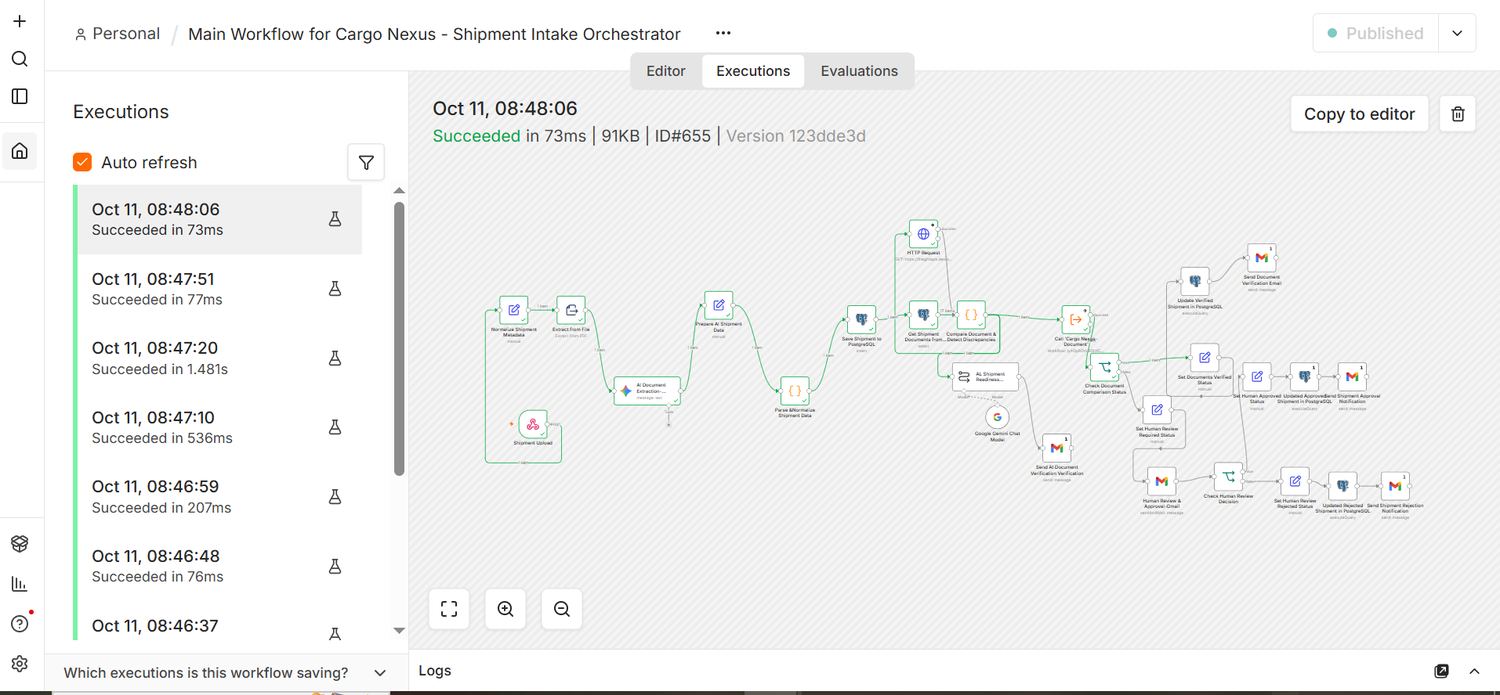
I tested both the approval path and the rejection path end to end, and the executions list shows successful runs of the main workflow.
Built to hold up
Two design choices. The document checks sit in their own sub-workflow, so they can change without touching the main flow. A person decides on every flagged case, so the workflow never approves one on its own.